How to Wire 3 way connection: Installation, Testing, and Troubleshooting
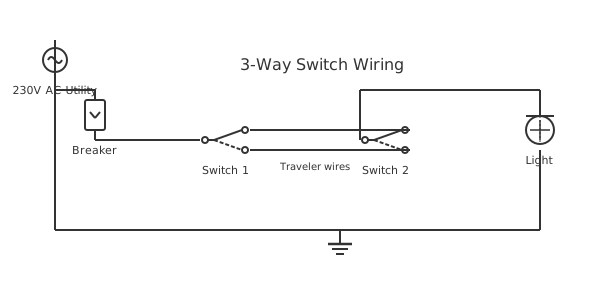
This is a free printable 3 way connection: download the diagram as SVG or open it and print to paper or PDF.
This comprehensive technical guide covers proper installation procedures, wiring configurations, safety considerations, and best practices for 3 way connection. Understanding component specifications, electrical principles, and code requirements ensures reliable operation.
Diagram checks and scope
- Components
- 6
- Wired connections
- 7
- Automated check
- Automated pin, route, source, and topology checks passed; this is not a safety certification.
The 3 way connection system represents an important component in modern electrical and mechanical applications. Proper wiring and installation following manufacturer specifications and applicable electrical codes is critical. This system incorporates multiple safety features and requires attention to proper connection sequences and protective device settings. Understanding the underlying electrical and mechanical principles allows technicians to troubleshoot problems efficiently and make informed design decisions. Industry standards establish consistent practices for installation, maintenance, and operation. Modern implementations often include advanced control features and monitoring capabilities. Regular maintenance following manufacturer guidelines ensures continued reliability and safety. Professional installation by qualified technicians is recommended for complex applications. Understanding the fundamentals of this system enables effective troubleshooting and informed decision-making regarding upgrades and modifications.
How to wire 3 way connection
- Review all specifications, manufacturer documentation, and applicable electrical codes before beginning
- Gather all required materials, tools, and safety equipment
- Turn off and lock out all power sources
- Install components according to specifications
- Make all connections using proper techniques and rated terminals
- Verify operation and safety before energizing the system
Frequently asked questions
What are the critical installation requirements?
Proper component selection rated for voltage and current, accurate wiring connections, protective devices, verification testing, and compliance with applicable electrical codes are essential requirements.
How do I verify my installation is correct?
Use appropriate test equipment to verify continuity, measure voltage and current at key points, confirm proper polarity, and verify all safety grounds are present and secure.
What safety precautions are essential?
Always disconnect power before work, wear appropriate safety equipment, follow all electrical code requirements, and never work on energized circuits without proper training and equipment.
What maintenance does this system require?
Periodic inspection, connection verification, cleaning to prevent corrosion, and testing of protective devices ensure continued safe and reliable operation.
When should I consult a qualified professional?
For complex installations, code compliance questions, equipment failures, or high-voltage work, always consult a qualified technician with appropriate credentials.
Sources and verification
Review status: Not independently reviewed. Automated topology checks confirm stored terminals and routes, not the correctness of manufacturer pin assignments, ratings, regional codes, or installation decisions. Verify those claims against the current primary documentation before use.
- IEC 61082-1:2014 — Rules for electrotechnical documents — International Electrotechnical Commission. Supports: General diagram, drawing, table, and reference-designation presentation conventions. Checked 2026-07-15.
Related diagrams
- eaton 3 way switch diagram
- legrand 3 way switch
- 2 humbuckers 1 volume 1 tone 3 way switch diagram
- 3 gang 1 way switch wiring diagram
- 3 gang 2 way switch wiring diagram
- 3 way bilge pump switch wiring diagram